Experiments in Togetherness

Next month I'm defending my PhD, which means it's a good moment to finally get some things out of my laptop. Much of my research sits in the space I’ve been calling social tinkering — the idea that collaborative exploration tends to produce richer outcomes than going it alone with technology. Alongside my empirical work focused on social learning, I’ve been building small design sketches and prototypes that ask a related question: what happens when AI interactions are visible, shared, or physically present rather than invisible and private?
These ideas range from quick sketches to more developed prototypes that were used for behavioral research. Sharing them here as fragments — partly to get them out of my files, and partly because I’d love to connect with others who are exploring these directions!
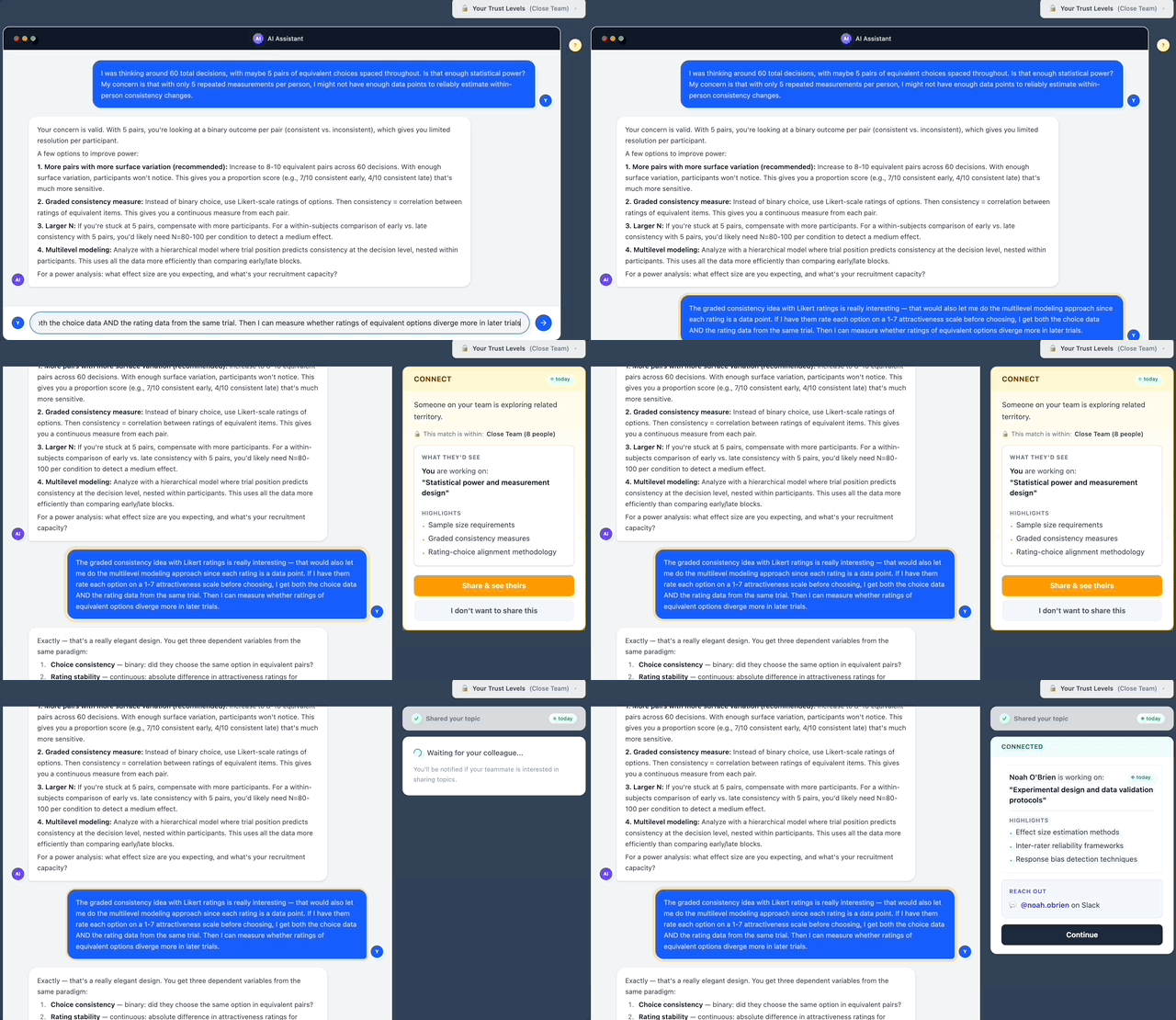
InquiryBits: a tool for making AI conversation traces visible within a small group. Instead of each person’s AI interactions disappearing into their own chat history, InquiryBits detects related conversations and (with consent) lets you share a filtered version of your topic of interest. The core questions: does knowing what your collaborators are thinking about with AI change how you think and interact? How do we keep thinking together when more of our thinking happens in private AI conversations? (this demo was part of a study I conducted to explore privacy-collaboration tradeoffs with social affordances in AI systems; I was a little surprised by how much appetite there was for sharing within trusted groups.)
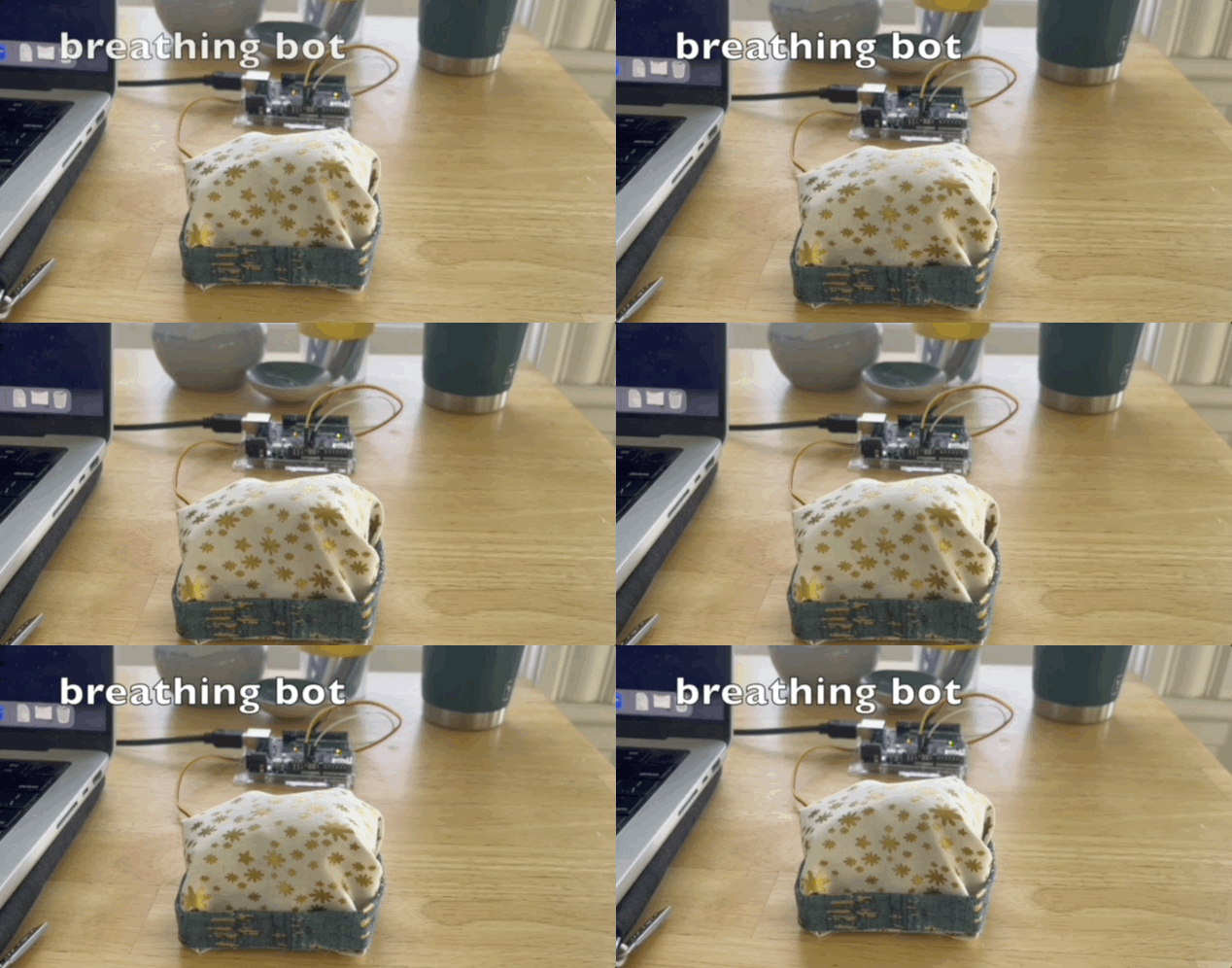
Breath bot: A small desktop robot that physically embodies the computational effort of the machine running it — rising and falling with the workload of your computer. Giving your AI-driven computational processes a body of their own, and way to subtly communicate status (instead of watching for a Claude Code notification, you might notice the breathing rate relaxes as effort slows). Built very quickly (vibecoded firmware and Serial web interface) for a course I taught on AI-assisted coding.
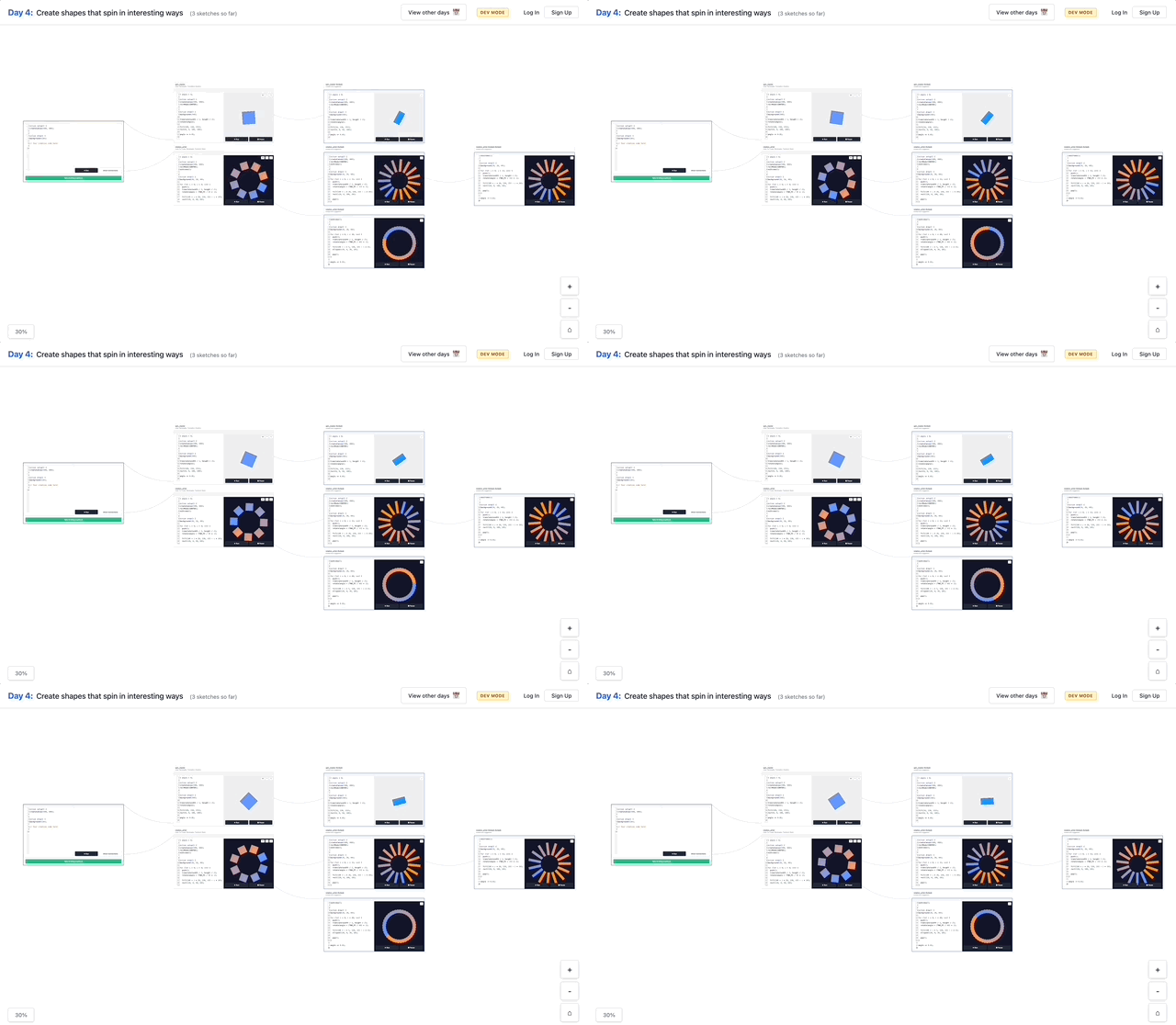
Parallel Sketches: A branching interface built around a daily creative coding challenge. While you work on your own sketch, the tool intelligently suggests similar work from other participants as a reference rather than providing AI-generated code suggestions. The interface allows for creating a forked lineage of edits and experiments, building on others’ ideas, making the creative process feel more like working in a shared studio.
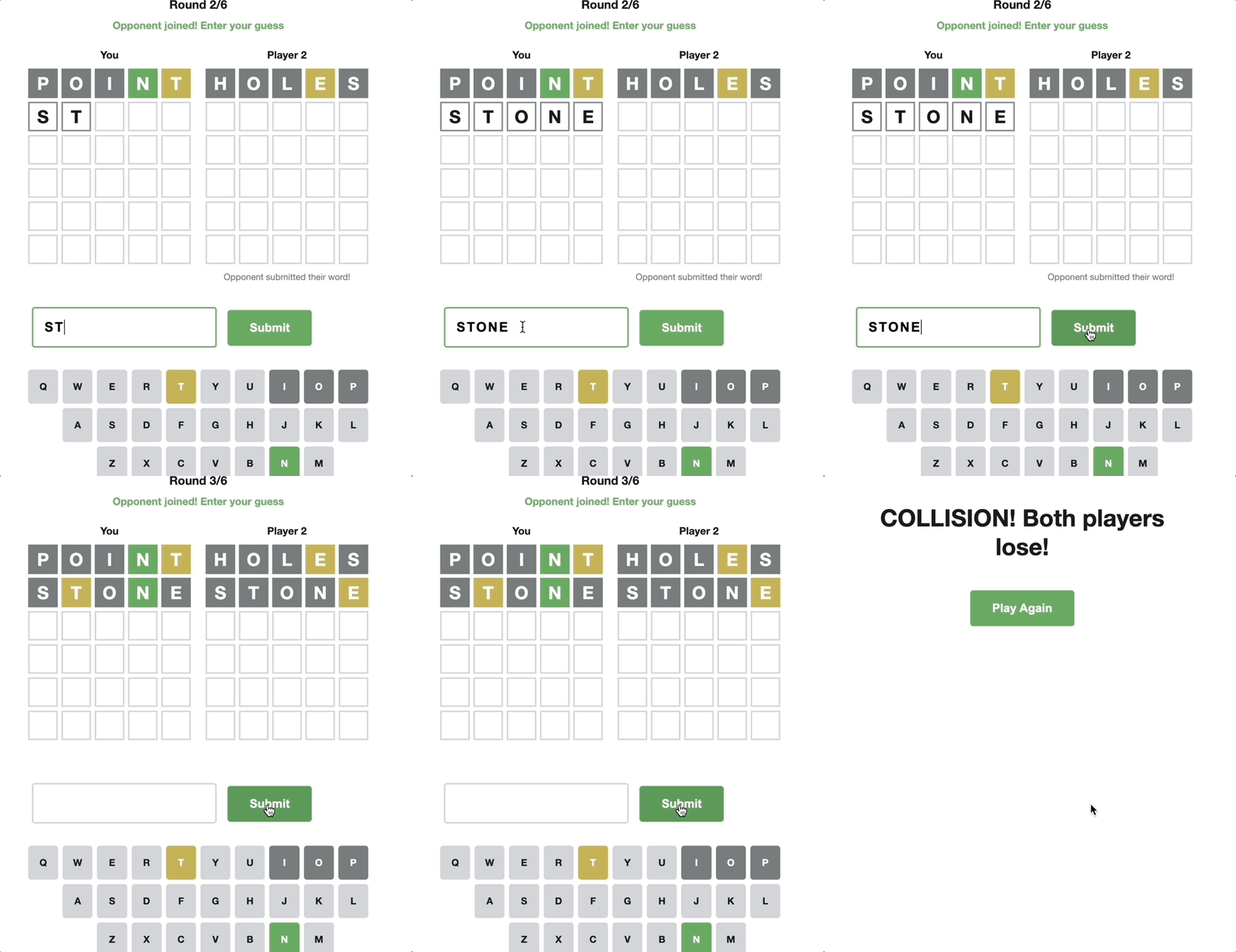
Finally, a crowd favorite: Wordle Duel! Not really AI-powered in any way except for being entirely vibe coded, this is a simple mashup of the Wordle game with collaborative collision dynamics: two players both try to guess the same word, but if they make the same wrong guess before getting it right, both are eliminated.
More coming soon! If any of this resonates, or if you’re thinking about how to make AI more social, collaborative, and/or physically present, send me a hello.
cover image: Julie Mehretu, Untitled 2, 1999
I’ve been thinking about building something similar to inquiry bits in playlab! I want my AI to connect me to other possible collaborators in my network that are thinking about similar things. Particularly in tbis case related to teacher PD, if others are working on similar projects I want to ask consent to share ideas and remix one another’s work. From a student perspective it could enable peer tutors to find near peers who are just a bit ahead that could help you master what you’re working on. In general I just want it to connect me with another human I could have a convo with who has already thought about the same idea.
The breathing bot with a little display that shows token usage count?